New In Box! Chicago Electric 10 In. 2.5 Hp Wet Tile Masonry Power Saw
+ Stand
USD $399.99
Condition : New – Open box
Free Shipping
{{variant_type_name}} :

Notify me when the price drops
We will email you if we find a lower price on this product!
NEW IN BOX! CHICAGO ELECTRIC 10 in. 2.5 HP Wet Tile Masonry Saw + Stand
Blade Dia.: 10 in
Item: Tile Saw
Voltage: 120V AC
Miter Angle Range: 0 Degrees to 45 Degrees
Current: 15 A
Max. Blade Speed: 4,200 RPM
Stand Included: Yes
Max. Cutting Depth: 3 3/8 in
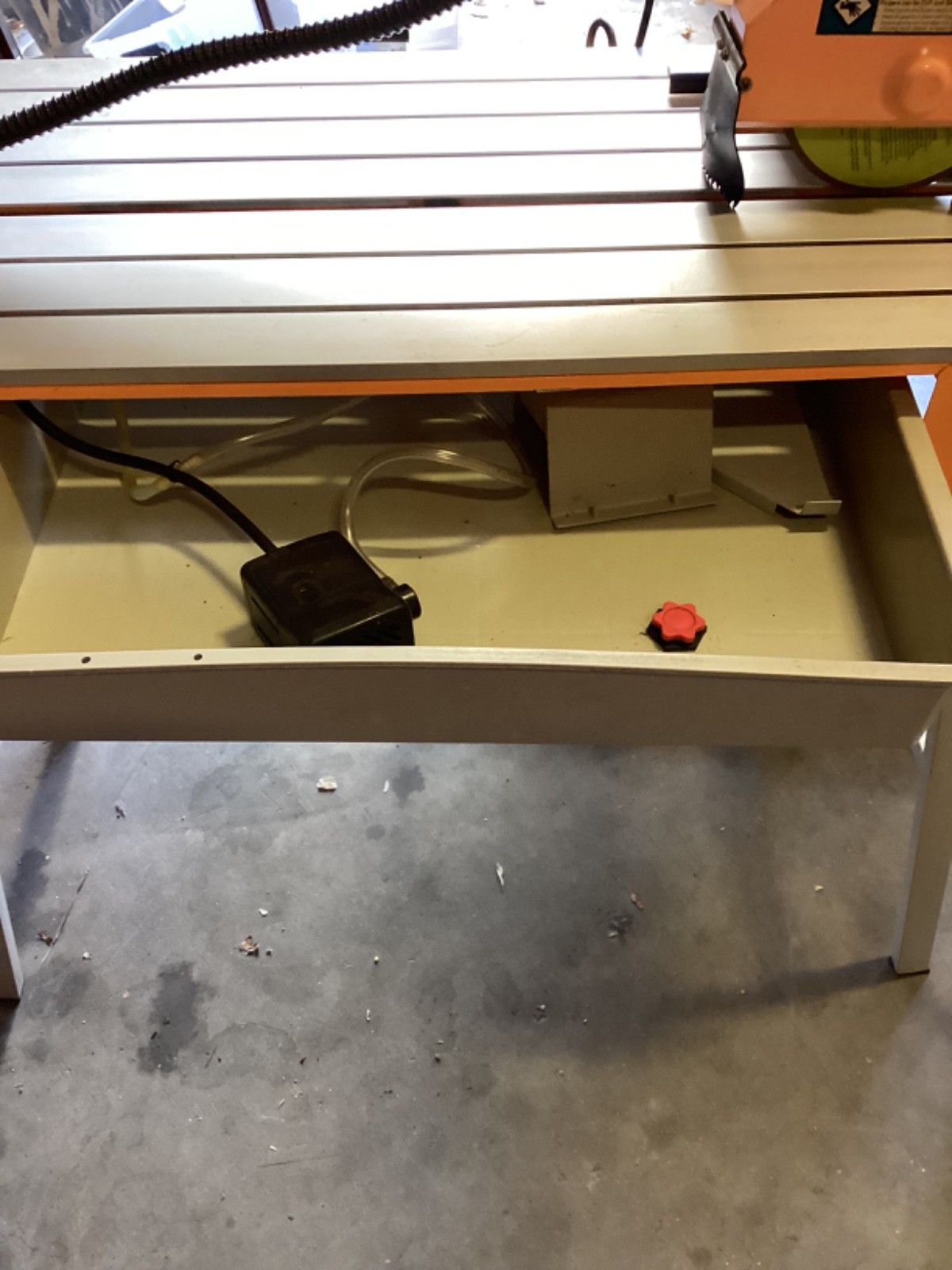
Includes: Blade Wrench, Cutting Cart Side Extension, Hex Wrench, Rear Water Tray, Side Water Tray, Submersible Pump, Water Pan
Electric Brake: Yes
Cutting Type: Wet
Arbor Size: 5/8 in
Features: Cut-line Indicator, Integrated Storage, Rigid Frame, Stainless Steel Rollers
Horsepower: 1.5
Tool Weight: 91.0 lb
Tool Style: Benchtop/Stand
Cord Length: 8 ft
CHICAGO ELECTRIC TILE SAW BUILD QUALITY
The Chicago Electric Power Tools 10″ Tile Saw is actually a pretty rugged saw. It has a cast alloy body and two-position cutting head for handling both tile and masonry up to 3.75″ in thickness. The frame is made of steel, with a squared-off welded base with plenty of supports and a tubular rim to which is attached the roller and sliding mechanism. It’s an extremely heavy device, weighing in at 140 pounds at the store. Since it doesn’t come with a stand, this thing is one heck of a load, even when you’re just porting it from a nearby shed to a table for cutting. We’d heartily recommend purchasing some kind of stand for the saw, preferably something with wheels. Chicago Electric Tools has a folding table stand with wheels, however a more robust third-party solutions might be better for long term use and storage.
Tile cutting is done by placing a tile on the rolling cutting tray and then sliding the tray towards the 10-inch diamond blade. Blades cost around $20 at Harbor Freight, but you’ll pay anywhere from $11 – $150 for a 10-inch blade at your local home improvement store. We’ll save the diamond blade shootout for another article. The rolling tray is built out of the same sturdy steel and has rubber pads on top to hold the tile securely in place and cushion it against vibrations during a cut.
Where the tray meets the steel frame there is a steel-on-steel guide system that allows the tray to slide along the left side. It’s important to keep the guide lubricated as there are no ball bearings or rollers on the hinge side to help the tray roll smoothly. On the opposite side is a single small roller, centrally located along the length of the tray which guides the right side along the tubular right-side rail. The composition of the tray and guide rail gets the job done, but it’s not very sophisticated.

Price type
IN STOCK
OUT STOCK






 .
